Almost exactly one year after the contamination incident in 2024 (Danish), Fredensborg Forsyning was affected again. This time, the contamination did not occur in a single location, but as two separate incidents in the distribution network, triggered by construction work on an acquired distribution network and a leaky roof drain at the Karlebo Water Tower, respectively.
At times, up to 10,000 households were subject to a boil-water advisory.
Event 1:
Stale water from fire hydrants—caused by construction work and low pressure
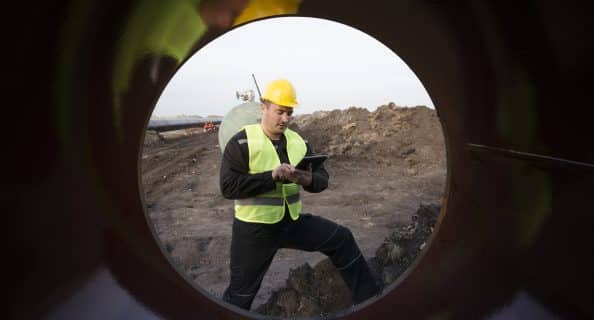
The first incident occurred in July. The contamination was caused by construction work: During the work, a pipe lost pressure, and old, stagnant water was likely drawn into it from fire hydrants.
Routine tests detected coliform bacteria in the Gunderød water system. Fredensborg Forsyning quickly took additional samples, and the pattern was clear: Nearly all samples showed high concentrations, except for the new water that had been added. This indicated that the source was within the distribution system itself.
Extensive flushing, close monitoring, and ongoing assessment of how the contamination might spread and how it could be removed most quickly and safely were initiated.

Event 2:
Leaking roof drain at the Karlebo Water Tower, which has an open water surface
A few weeks into the response to Incident 1, Incident 2 occurred: Coliform bacteria were detected in the Karlebo Water Tower, and E. coli and intestinal enterococci were later identified, indicating fecal contamination. A boil-water advisory was issued to more than 10,000 households.
During expanded sampling, low concentrations of coliform bacteria, E. coli, and intestinal enterococci were also detected at subsequent sampling points in Nivå and Kokkedal. The water tower was therefore quickly isolated from the system and examined more closely.
The inspection revealed a strong lead: The water tower’s design included roof drainage on the interior side, and there were signs that a leaky drainpipe might have caused rainwater to drip into the clean water tank, which has an open water surface.
Karlebo Water Tower was therefore shut down and disconnected from the distribution network, placing pressure on Novafos, as the tower serves as an emergency water supply for Hørsholm. The tower is slated for permanent closure, as the cost of renovation is disproportionate to its remaining service life.

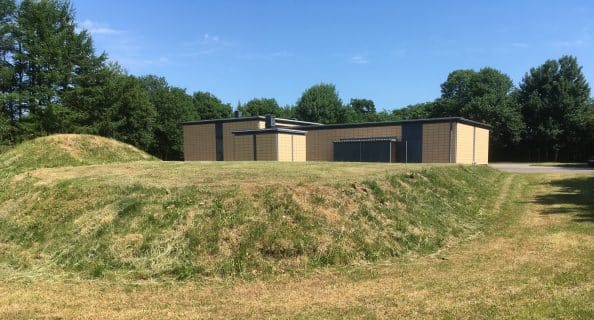
Karlebo Water Tower, where contamination was detected.

Rainwater collection on the roof of the water tower.

Open water surface with drain pipes running around the tank.

The leaky roof drain, which was the immediate cause of the contamination.
Which tools were implemented?
Fredensborg Forsyning acted quickly and professionally. Envidan served as an additional resource and technical partner, assisting with meeting facilitation, the evaluation of test results, data structuring, and planning the next steps.
Hydraulic Modeling of the Distribution Network
The model was used to assess possible sources and potential pathways of spread, and to test scenarios when the samples showed a new pattern. In this type of case, results can vary significantly, especially when the release from the biofilm occurs in “bursts.” Therefore, the modeling was used as a decision-making tool in conjunction with the latest analysis results.
Strategic Sampling Program and Flushing Plans
A sampling program was established that involved the rapid collection of supplemental samples and ongoing adjustments to sampling locations. At the same time, the flushing operation was planned so that it:
- Took into account operations and capacity
- Supported the gradual release of areas
- Minimized the risk of “spreading” the contamination
Close dialogue with authorities and documentation
When boiling recommendations are expanded or revoked, a high degree of professional certainty is required. The initiative included ongoing consultation on documentation, risk assessment, and reasoning, so that well-founded decisions could be made quickly.
Data and GIS as a Shared “Snapshot of the Situation”
Test results, operational data, and model results needed to be understandable and usable by many people at once, both internally and externally. Therefore, a structured approach was taken to the data set and the presentation of results.
GIS maps for residents provided an overview
As citizens called for greater transparency in test results, an interactive map was developed using the Python package Folium.
The map displays testing sites and the results of laboratory tests, and allows you to track:
- Where the boiling recommendation currently applies
- Where samples were taken
- What the tests show
The visualization was simple and intuitive:
- Green faucets = clean water
- Red taps = contamination / boiling recommendation

This map was used internally by the emergency response team during daily meetings to establish a shared understanding of the situation
Envidan’s role in the project
Envidan served as a close partner to Fredensborg Forsyning throughout the entire process and contributed, among other things, by:
- Hydraulic Modeling and Scenario Analyses
- Decision Support for Daily Status Meetings
- Sampling Strategy, Data Processing, and Presentation of Analysis Results
- Flushing Plans and Ongoing Adjustments to the Response
- GIS and data tools (including the Citizen Map)
- Discussion on Dialogue with Authorities and Documentation